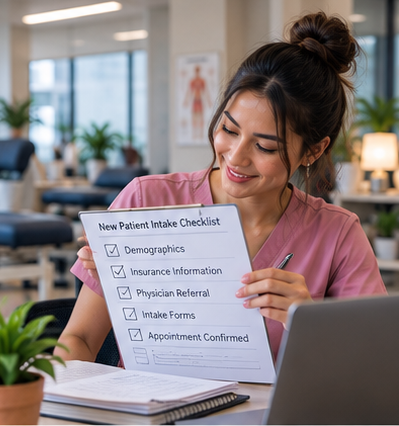
PT first visit readiness begins while the team still has time to resolve missing information.
Tomorrow’s evaluation appears on the schedule. The patient has confirmed, and the therapist has reserved the time. However, an intake form remains incomplete and nobody has reviewed an open insurance question.
The appointment exists. The administrative preparation still needs attention.
A readiness workflow brings these items into one view. As a result, the team can act before the patient reaches the desk.
Why PT First Visit Readiness Matters
Intake, insurance preparation and billing follow-through each need clear information from the steps before them.
Missing details can force staff to repeat questions or search for documents. Therefore, the readiness review should show both completed work and remaining requirements.
The goal is a clear handoff.
A readiness label does not replace clinical judgment, coverage review or the clinic’s decisions about proceeding.
Why Appointment Confirmation Is Only One Check
A patient can confirm an appointment while still needing help with forms.
Likewise, staff can finish one review while another requirement remains open.
A single “ready” checkbox can hide those differences. Instead, track individual items and assign each gap to the right person.
Use statuses that explain action. “Needs intake link resent” gives more direction than “paperwork issue.”
What the Readiness View Should Include
| Item | What the team needs to see |
|---|---|
| Patient information | Required fields complete or missing |
| Intake forms | Received, incomplete or needing help |
| Insurance review | Findings and unresolved questions |
| Referral requirements | Applicable status and next action |
| Authorization requirements | Review outcome and linked follow-up |
| Visit instructions | Details communicated to the patient |
| Open issue | Owner, action and review date |
| Exception decision | Designated reviewer and documented direction |
Keep this information in the approved record. Also, link to existing findings instead of copying them into several places.
Six Steps to Prepare for the First Visit
1. Set a Review Point
First, choose a checkpoint that fits your appointment lead times.
A clinic scheduling same-day evaluations needs a different process from one booking several days ahead.
2. Review the Required Items
Next, compare the record with the clinic’s intake checklist.
Mark each item clearly so the next person can see what remains.
3. Explain the Patient’s Next Step
If a form remains incomplete, tell the patient which form needs attention and how to get help.
Use approved channels and wording.
4. Assign Internal Follow-Up
Then, route insurance, referral or authorization questions to the person responsible.
Include the appointment timing so the receiving person understands the context.
5. Escalate Unresolved Exceptions
Bring unresolved requirements to the designated reviewer.
Administrative staff should follow clinic direction rather than make independent clinical or coverage decisions.
6. Close the Preparation Loop
Finally, update the record after each response.
Confirm that the front desk can find the latest status without searching across several message threads.
PT First Visit Readiness: Measures to Review
Choose the required items before calculating the rate.
Readiness rate = evaluations meeting the clinic’s administrative checklist at the checkpoint ÷ evaluations reviewed × 100
For example, 18 ready records among 24 evaluations produce a 75% rate. This is a sample calculation rather than a recommended target.
Also track:
- Missing-item categories
- Patient assistance requests
- Exceptions requiring review
- Gaps discovered at arrival
- Follow-ups completed after the chosen checkpoint
These details explain why the overall rate changes.
Separate Preparation From Later Billing Work
An organized intake can give the billing team clearer information. However, administrative readiness does not establish that a future claim will receive payment.
Keep the workflows connected through accurate records.
For example, an unresolved plan detail should remain visible to the authorized person who needs it later.
This connection supports consistent billing follow-up without treating intake as a payment guarantee.
PT First Visit Readiness: A Small Workflow Audit
Review the clinic’s last 20 evaluations.
Check the status each record showed before arrival. Then note which gaps staff discovered at check-in.
Look for repeated patterns.
If patients frequently need help with the same form, revise the instructions. If internal questions remain open, review ownership and escalation timing.
For help mapping the handoffs, consult the AHRQ workflow assessment toolkit.
Make Preparation Visible Before Arrival
PT first visit readiness works best when the team can see specific gaps early.
Begin with a clear checklist, a review point and one owner for each next action.
Explore PhysioVA administrative support for help organizing intake work.
Want to identify unfinished preparation before patients arrive? Request a PhysioVA Workflow Review to review your first-visit process.